Showing posts with label 2 types of electricity Static electricity N Current electricity. Show all posts

Saturday, March 20, 2021

Electricity and Magnetism - Power Explained


Electricity and Magnetism - Power Explained

Electricity is a form of energy that is transmitted through copper conductor wire to give power to the operation of electrical machines and devices such as industrial, commercial, institutional and residential lighting, electric motors, electrical transformers, communications networks, home appliances, electronics, etc.

When charged particles flow through the conductor, we call it "current electricity". This is because when the charged particles flow through wires, electricity also flows. We know that current means the flow of anything in a particular direction. For example, the flow of water. In the similar way, the flow of electricity in a certain direction is called current electricity or electric current.

 Magnetism is a type of attractive or repulsive force that acts up to certain distance at the speed of light. The distance up to which this attractive or repulsive force acts is called a "magnetic field". Magnetism is caused by the moving electric charges (especially electrons). When two magnetic materials are placed close to each other, they experience an attractive or repulsive force. 

What is the relationship between electricity and magnetism?

In the early days scientists believed that, thet were two uniquely, separate forces. However, James Clerk Maxwell proved these two separate were actually interrelated forces.

In 1820, Hans Christian Orsted observed a surprising thing, when he switched on the battery from which the electric current is flowing, the compass needle moved away from the point north. After this experiment, he concluded that, the electric current flowing through the wire produces a magnetic field.
 

Electricity and magnetism are related closely to each other. The electric current flowing through the wire produces a circular magnetic field outside the wire. The direction (clockwise or counter-clock wise) of this magnetic field is depends on the direction of the electric current.

In the similar way, a changing magnetic field produces an electric current in a wire or conductor. The relationship between them is called electromagnetism.

Electricity and magnetism is an interesting aspect of electricity sciences. We are familiar with in our everyday lives with the phenomenon of static cling - when two objects, such as a piece of Saran wrap and a wool sweater, are rubbed together, they cling.

One feature of this that we don't encounter too often is static "repulsion" - if each piece of Saran wrap is rubbed on the wool sweater, then the pieces of Saran wrap will repel when brought near each other. These phenomena are interpreted in terms of the objects acquiring an electric charge, which has the following features:


  • There are two types of charge, which by convention are labelled positive and negative.
  • Like charges repel, and unlike charges attract.
  • All objects may have a charge equal to an integral number of a basic unit of charge.
  • Charge is never created or destroyed.


Electric Fields
A convenient concept for describing these electric current and magnetic current forces is that ofelectric fields currents. Imagine that we have a fixed distribution of charges, such as on the plate below, and bring in the vicinity of this distribution a test charge Q.


Fig. 1 Test charge in the presence of a fixed charge distribution

This charge will experience a force due to the presence of the other charges. One defines the electric field of the charge distribution as:


img135

The electric field is a property of this fixed charge distribution; the force on a different charge Q' at the same point would be given by the product of the charge Q' and the same electric field. Note that the electric field at Q is always in the same direction as the electric force.

Because the force on a charge depends on the magnitude of the charges involved and on the distances separating the charges, the electric field varies from point to point, both in magnitude and direction.

By convention, the direction of the electric field at a point is the direction of the force on a positive test charge placed at that point. An example of the electric field due to a positive point charge is given below. 


Fig. 2: Electric field lines of a positive charge


Power and Magnetic Fields
A phenomenon apparently unrelated to power are electrical magnetic fields. We are familiar with these forces through the interaction of compasses with the earth's magnetic field, or through fridge magnets or magnets on children's toys. Magnetic forces are explained in terms very similar to those used for electric forces:

  • There are two types of magnetic poles, conventionally called North and South
  • Like poles repel, and opposite poles attract

However, this attraction differs from electric power in one important aspect:

  • Unlike electric charges, magnetic poles always occur in North-South pairs; there are no magnetic monopoles.

Later on we will see at the atomic level why this is so.

As in the case of electric charges, it is convenient to introduce the concept of a magnetic field in describing the action of magnetic forces. Magnetic field lines for a bar magnet are pictured below.


One can interpret these lines as indicating the direction that a compass needle will point if placed at that position.

The strength of magnetic fields is measured in units of Teslas (T). One tesla is actually a relatively strong field - the earth's magnetic field is of the order of 0.0001 T.


Magnetic Forces On Moving Charges
One basic feature is that, in the vicinity of a magnetic field, a moving charge will experience a force. Interestingly, the force on the charged particle is always perpendicular to the direction it is moving. Thus magnetic forces cause charged particles to change their direction of motion, but they do not change the speed of the particle.

This property is used in high-energy particle accelerators to focus beams of particles which eventually collide with targets to produce new particles in gamma rays and radio waves.

Another way to understand these electricity and magnetism forces is to realize that if the force is perpendicular to the motion, then no work is done. Hence these forces do no work on charged particles and cannot increase their kinetic energy.

If a charged particle moves through a constant magnetic field, its speed stays the same, but its direction is constantly changing. A device in which this property is used is the mass spectrometer, which is used to identify elements. A basic mass spectrometer is pictured below.


In this device a beam of charged particles (ions) enter a region of a magnetic field, where they experience a force and are bent in a circular path. The amount of bending depends on the mass (and charge) of the particle, and by measuring this amount one can infer they type of particle that is present by comparing to the bending of known elements.


Magnet Power From Electric Power
A connection was discovered (accidentally) by Orsted over 100 years ago, who noticed that a compass needle is deflected when brought into the vicinity of a current carrying wire. Thus, currents induce in their vicinity magnetic fields. An electromagnet is simply a coil of wires which, when a current is passed through, generate a magnetic field, as below.


Another example is in an atom, since an electron is a charge which moves about the nucleus, in effect it forms a current loop, and hence a magnetic field may be associated with an individual atom. It is this basic property which is believed to be the origin of the magnetic properties of various types of materials found in nature.

Maxwell equations (otherwise known as maxwell theory) are a set of coupled partial differential equations that, together with the Lorentz force law, form the foundation of classical electromagnetism which deal with electromagnetic radiation, electromagnetic waves and electromagnetic force. 


Wednesday, March 17, 2021

What is Electricity?


What is Electricity?

what is electricity

Electricity is one of the most widely used forms of energy

WHAT IS ELECTRICITY?

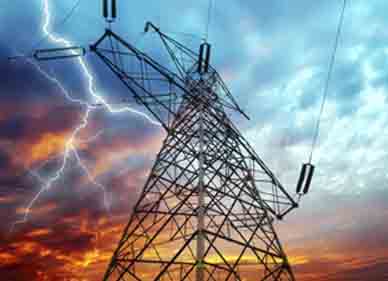
Electricity is not only a basic part of nature. It is also one of the most widely used forms of energy. In addition to naturally occurring in the form of lightning or static electricity, it is also a manufactured product, created in an electrical generator, flowing from there through wires to where it is consumed.

Electricity is the flow of electrical power or charge through a conductor. Copper wires are good conductors of electric current.

The electricity that we use is a secondary energy source because it is produced by converting primary sources of energy such as coal, natural gas, nuclear energy, solar energy, and wind energy into electrical power. It also referred to as an energy carrier, which means it can be converted to other forms of energy such as mechanical energy or heat.

Electricity use has dramatically changed daily life

Despite its great importance in daily life, few people probably stop to think about what life would be like without electricity. Like air and water, people tend to take electricity for granted. But people use electricity to do many jobs every day—from lighting, heating, and cooling homes to powering televisions and computers.

Before electricity became widely available about 100 years ago, candles, whale oil lamps, and kerosene lamps provided light, iceboxes kept food cold, and wood-burning or coal-burning stoves provided heat.

Scientists and inventors have worked to decipher the principles of electricity since the 1600s. Some notable accomplishments were made by Benjamin Franklin, Thomas Edison, and Nikola Tesla.

Benjamin Franklin demonstrated that lightning is electricity. Thomas Edison invented the first long-lasting incandescent light bulb.

Prior to 1879, direct current (DC) electricity had been used in arc lights for outdoor lighting. In the late 1800s, Nikola Tesla pioneered the generation, transmission, and use of alternating current (AC) electricity, which reduced the cost of transmitting electricity over long distances. Tesla's inventions brought electricity into homes to power indoor lighting and into factories to power industrial machines.


Electricity is the flow of electrically charged particles (such as electrons or protons), either statically as an accumulation of charge or dynamically as a electrical current. All matter is made up of atoms, and an atom has a center, called a nucleus. The nucleus contains positively charge electricity particles called protons and uncharged particles called neutrons.

The nucleus of an atom is surrounded by negatively charged particles called electrons. The negative charge is measured as electrons moved equal to the positive charge of a proton, and the number of electrons in an atom is usually equal to the number of protons.

When the balancing force between protons and electrons is upset by an outside force, an atom may gain or lose an electron. When electrons are "lost" from an atom, the free movement of these electrons constitutes an electric current.

Power is a basic part of nature and it is one of our most widely used forms of energy. We get power, which is a secondary energy source, from the conversion of other sources of energy, like coal, natural gas, oil, nuclear power and other natural sources, which are called primary sources. Electricity utilities keep electric flowing 4 hours a day, to a nation thirsty for electric power.

Many cities and towns were built alongside waterfalls (a primary source of mechanical energy) that turned water wheels to perform work. Before power generation began slightly over 100 years ago, houses were lit with kerosene lamps, food was cooled in iceboxes, and rooms were warmed by wood-burning or coal-burning stoves.

Beginning with Benjamin Franklin's experiment with a kite one stormy night in Philadelphia, the principles of power gradually became understood. In the mid-1800s, Thomas Edison changed everyone's life -- he perfected his invention -- the electric light bulb. Prior to 1879, power had been used in arc lights for outdoor lighting. Edison's invention used power to bring indoor lighting to our homes.


HOW IS A TRANSFORMER USED?

To solve the problem of sending power through circuits over long distances, George Westinghouse developed a device called a transformer. The transformer allowed power to be efficiently transmitted over long distances. This made it possible to supply power to homes and businesses located far from the electric generating plant.

Despite its great importance in our daily lives, most of us rarely stop to think how life would be like without power. Yet like air and water, we tend to take power for granted. Everyday, we use power to do many functions for us -- from lighting and heating/cooling our homes, to being the power source for televisions and computers. power is a controllable and convenient form of energy used in the applications of heat, light and power.

Today, the United States (U.S.) electric power industry is organized to ensure that an adequate supply of power is available to meet all demand requirements at any given instant.


WHAT IS ELECTRICITY? HOW IS POWER GENERATED?

An electric generator is a device for converting mechanical kinetic energy into electrical energy in a power station. The process is based on the relationship between magnetism and power. When a wire or any other electrically conductive material moves across a magnetic field, an electric current occurs in the wire.The large generators used by the electric utility industry have a stationary conductor.

A magnet attached to the end of a rotating shaft is positioned inside a stationary conducting ring that is wrapped with a long, continuous piece of wire. When the magnet rotates, it induces a small electric current in each section of wire as it passes. Each section of wire constitutes a small, separate electric conductor. All the small currents of individual sections add up to one current of considerable size.This current is used for electric power.


HOW IS ELECTRICITY MEASURED?

Power is measured by electric fields, in units of power called watts. It was named to honor James Watt, the inventor of the steam engine. One watt is a very small amount of power. It would require nearly 750 watts to equal one horsepower in terms of the amount of electric potential energy.

A kilowatt represents 1,000 watts. A kilowatt-hour (kWh) is equal to the energy of 1,000 watts working for one hour.

The amount of power a power plant generates or a customer uses over a period of time is measured in kilowatt hours (kWh). Kilowatt hours are determined by multiplying the number of kW's required by the number of hours of use. For example, if you use a 40-watt light bulb 5 hours a day, you have used 200 watts of power, or .2 kilowatt hours of electrical energy.

Electric Power in General

Traditional electric utilities in the United States are generating electric power at tremendous rates and are responsible for ensuring an adequate and reliable supply of electricity energy to all consumers at a reasonable cost. Electric utilities include investor-owned, publicly owned, cooperatives, and Federal utilities.

Power marketers are also considered electric utilities--these entities buy and sell power, but usually do not own or operate generation, transmission, or distribution facilities. Utilities are regulated by local, State, and Federal authorities.

The electric power industry is evolving from a highly regulated, monopolistic industry with traditionally structured electric utilities to a less regulated, competitive industry. The Public Utility Regulatory Policies Act of 1978 (PURPA) opened up competition in the generation market with the creation of qualifying facilities. The Energy Policy Act of 1992 (EPACT) removed some constraints on ownership of electric generation facilities and encouraged increased competition in the wholesale electric power business.


Saturday, March 13, 2021

Types of Electricity - Modern Methods


Types of Electricity - Modern Methods

page corner

There are two types of Electricity, Static Electricity and Current Electricity. Static Electricity is made by rubbing together two or more objects and making friction while Current electricity is the flow of electric charge across an electrical field.

Static Electricity

Static electricity is when electrical charges build up on the surface of a material. It is usually caused by rubbing materials together. The result of a build-up of static electricity is that objects may be attracted to each other or may even cause a spark to jump from one to the other. For Example rub a baloon on a wool and hold it up to the wall.

Before rubbing, like all materials, the balloons and the wool sweater have a neutral charge. This is because they each have an equal number of positively charged subatomic particles (protons) and negatively charged subatomic particles (electrons). When you rub the balloon with the wool sweater, electrons are transferred from the wool to the rubber because of differences in the attraction of the two materials for electrons. The balloon becomes negatively charged because it gains electrons from the wool, and the wool becomes positively charged because it loses electrons.


Current Electricity

Current is the rate of flow of electrons. It is produced by moving electrons and it is measured in amperes. Unlike static electricity, current electricity must flow through a conductor, usually copper wire. Current with electricity is just like current when you think of a river. The river flows from one spot to another, and the speed it moves is the speed of the current. With electricity, current is a measure of the amount of energy transferred over a period of time. That energy is called a flow of electrons. One of the results of current is the heating of the conductor. When an electric stove heats up, it's because of the flow of current.

There are different sources of current electricity including the chemical reactions taking place in a battery. The most common source is the generator. A simple generator produces electricity when a coil of copper turns inside a magnetic field. In a power plant, electromagnets spinning inside many coils of copper wire generate vast quantities of current electricity.

There are two main kinds of electric current. Direct (DC) and Alternating (AC). It's easy to remember. Direct current is like the energy you get from a battery. Alternating current is like the plugs in the wall. The big difference between the two is that DC is a flow of energy while AC can turn on and off. AC reverses the direction of the electrons.


https://notall1.blogspot.com/2021/03/how-electricity-generate.html